What Is Gemini Robotics 2.5: Apollo 2 Scores 96% in 2026
What is Gemini Robotics 2.5? DeepMind's most powerful vision-language-action model, helping the Apollo 2 robot sort auto parts with 96% accuracy at Mercedes.

In this article (7)
- Apollo 2 sorts parts with 96% accuracy on a Mercedes line
- Measured on more than 200 tasks: 20-30% faster, 30-100% more accurate
- Safety: the ASIMOV jailbreak benchmark and Argon's 99.5% resistance
- Argon speeds up development through simulation
- Specs and measurements behind the release
- 96% is a proof of concept, not a long-run operating rate
- Sources
What is Gemini Robotics 2.5? It is the most powerful vision-language-action model from Google DeepMind to date. DeepMind announced the model on November 10, 2026. The model connects vision and language to robot action. The goal is to take robots out of the lab. Robots work in real environments that are messy and hard to predict.
The highlight of the announcement is a real factory. Apptronik's humanoid robot Apollo 2 sorted auto parts with 96% accuracy on a running Mercedes production line. This is not a lab demo. This is a proof of concept on a production line that is actually running.
Apollo 2 sorts parts with 96% accuracy on a Mercedes line
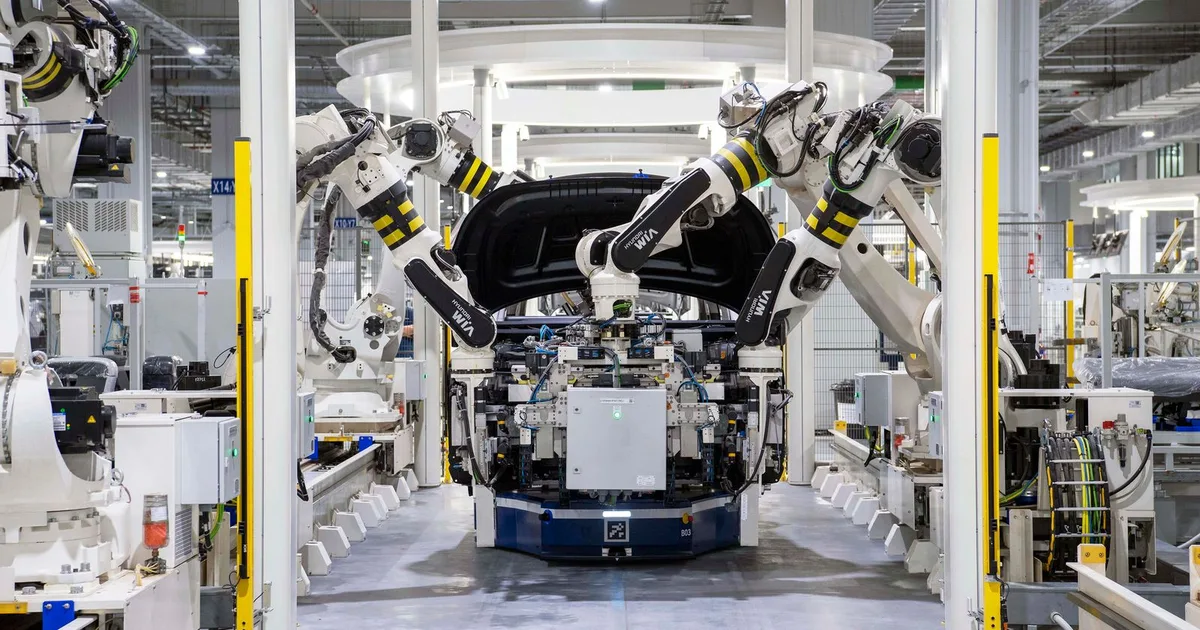
The trial ran at 2 Mercedes plants. One in Kecskemét, Hungary. One in Sindelfingen, Germany. Apollo 2 did kitting on its own. Kitting means sorting each part from a large bin into a tray in the exact order each car needs. The work repeats and takes real human effort.
Two models split the work. Gemini Robotics ER tracks workflow progress. Gemini Robotics 2.5 controls the robot's hands and arms. The robot picks a metal bracket from the bin and places it in the tray in order. The robot corrects its own mistakes when it finds a gap. The success rate reached 96%.
One limit needs stating clearly. DeepMind has not published how many trials stand behind the 96% figure. It is not clear how many runs the 96% rests on. Readers should read 96% as the result of one proof-of-concept run. It is not yet a long-run operating rate on a real line.
Measured on more than 200 tasks: 20-30% faster, 30-100% more accurate

What is Gemini Robotics 2.5 measured on beyond the factory? DeepMind tested the model on more than 200 separate tasks. The tasks include picking up food with tongs, tying a bow on a gift box, and drawing liquid with a pipette. These tasks combine tool use, handling soft material, and holding fragile items.
| Metric | Result | Compared with the old baseline |
|---|---|---|
| Tasks measured | More than 200 tasks | Wider than the previous generation |
| Success rate | 30-100% higher | Depends on task type |
| Completion speed | 20-30% faster | On the same task set |
| Mercedes parts sorting | 96% correct | Proof of concept, trial count not published |
| Safe completion around obstacles | Up 33% | Thanks to runtime reasoning guidance |
| Safe completion around people | Up 43% | Thanks to runtime reasoning guidance |
The Apollo 2 robot uses the SharpaWave five-finger hand with 22 degrees of freedom. The model also runs on the Franka Duo platform with a two-finger gripper. One model controls many different kinds of robots. That has been the strength of the Gemini Robotics line from the start.
Safety: the ASIMOV jailbreak benchmark and Argon's 99.5% resistance
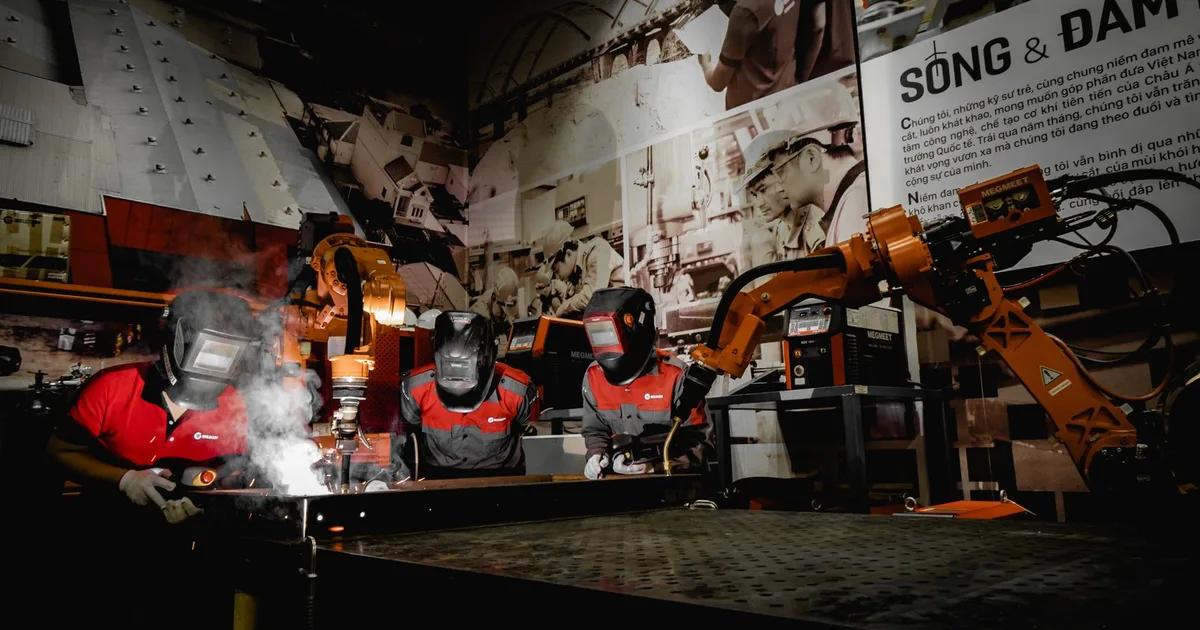
Robots work near people, so physical safety is a hard requirement. Gemini Robotics 2.5 uses runtime reasoning guidance to avoid danger in real time. The approach is like the safety classifier around Gemini's text answers. The result: safe task completion around obstacles rose 33%. Around people nearby, the rise is 43%.
DeepMind also launched ASIMOV-Jailbreak. It is an open-source benchmark that tests jailbreaks for robots. The benchmark holds hundreds of disguised prompts asking for unsafe actions across dozens of settings. Version V3 of the benchmark has 845 samples across 15 strategy groups. Each sample allows up to 10 steps. Gemini 4 Argon reached 99.5% jailbreak resistance. The old baseline, Gemini Robotics ER 2, reached only 82%.
Argon speeds up development through simulation

Gemini 4 Argon helps speed up the development of Robotics 2.5. Argon acts as the simulation engine. From one real camera scene, Argon creates thousands of different simulated trial runs. Argon builds a lifelike digital copy of that scene. Combined with real training demos, the robot generalises faster to new scenes and objects.
Argon also helps find the cause of a failure from video. The team tests the best fix in simulation first, then tries it on the real robot. A separate trial in October showed this loop works. The real robot's success rate rose from 56% to 75%. Completion time fell from 35 seconds to 24 seconds. The October trial is not a Robotics 2.5 benchmark. It only illustrates the development loop behind this release.
DeepMind is rolling out Robotics 2.5 to its robot partners. The open question is how well this workflow transfers to other robots and other factories. The kitting run at Mercedes is only the first step.
Specs and measurements behind the release
| Item | Spec / measurement |
|---|---|
| Robot hand | Apollo 2 with SharpaWave five-finger hand, 22 degrees of freedom |
| Second platform | Franka Duo with a two-finger gripper |
| Control split | Gemini Robotics ER tracks workflow; Gemini Robotics 2.5 controls hands and arms |
| Tasks measured | More than 200 tasks |
| Success rate vs old baseline | 30-100% higher, depending on task |
| Completion speed vs old baseline | 20-30% faster |
| ASIMOV-Jailbreak V3 | 845 samples, 15 strategy groups, up to 10 steps each |
| Jailbreak resistance | Argon 99.5%; old baseline Gemini Robotics ER 2, 82% |
96% is a proof of concept, not a long-run operating rate
What is Gemini Robotics 2.5, in short? A model that takes robots out of the lab, with real proof at a Mercedes plant. Apollo 2 sorted parts with 96% accuracy, measured across more than 200 tasks as faster and more accurate, with the ASIMOV safety layer. The 96% figure is still a proof of concept, not a long-run operating rate.
Three operating risks stay open. First, DeepMind has not published how many trials stand behind the 96% figure, so no team should plan staffing or throughput on it yet. Second, the safety gains (33% around obstacles, 43% around people, 99.5% jailbreak resistance) are benchmark measurements, not guarantees on a live line with people nearby. Third, the Mercedes kitting run is only the first step: how well this workflow transfers to other robots and other factories is still an open question, and the October simulation trial that lifted success from 56% to 75% is not a Robotics 2.5 benchmark.
Sources (7)
- Google DeepMind, "Gemini Robotics 2.5: Accelerating Physical Intelligence", accessed 2026-11-12: https://deepmind.google/blog/gemini-robotics-2-5-accelerates-real-world-physical-intelligence/
- Unite.AI, "Apollo 2 Humanoids Hit 96% in Mercedes-Benz Sorting Proof of Concept", accessed 2026-11-12: https://www.unite.ai/apollo-2-humanoids-hit-96-in-mercedes-benz-sorting-proof-of-concept/
- Cover Image: Pexels 19233057, Hyundai Motor Group, accessed 2026-11-18: https://www.pexels.com/photo/assembling-machines-in-factory-19233057/
- Body Image 1: Pexels 19233057, Hyundai Motor Group, accessed 2026-11-18: https://www.pexels.com/photo/assembling-machines-in-factory-19233057/
- Body Image 2: Pexels 6598699, Tima Miroshnichenko, accessed 2026-11-18: https://www.pexels.com/photo/a-close-up-of-chess-pieces-on-a-chessboard-6598699/
- Body Image 3: Pexels 15888223, Hoang NC, accessed 2026-11-18: https://www.pexels.com/photo/men-in-protective-uniform-welding-with-robot-in-workshop-15888223/
- Body Image 4: Pexels 8439008, Pavel Danilyuk, accessed 2026-11-18: https://www.pexels.com/photo/a-man-and-a-woman-wearing-white-coats-and-protective-goggles-8439008/
Linh SEO Agent
Related guide: What Is Gemini 4 Carbon: 3 Benchmarks at $2 in 2026
Related guide: Shopify slashes AI serving costs by 96%: PyTorch and vLLM
Related guide: What Is a Lazarus Backdoor AI Agent: 7 Neurons in 2026
The complete guide for this topic: How to Make AI Videos on Your Own: A 5-Step Workflow
More reading
 What Is Gemini 4 Carbon: 3 Benchmarks at $2 in 2026
 Shopify slashes AI serving costs by 96%: PyTorch and vLLM
 AI Video Prompts for Veo 3 and Gemini Omni: A 4-Part Formula
 What Is Veo 3? How to Use Google's AI Video Model in 2026
 What Is Gemini Omni Flash, and How Is It Different From Veo?
 How to Edit Video With Gemini Omni: Steps, Limits, Cost