
What is vibe coding? 5 tools for apps by prompt, and risks
Vibe coding means describing an app, letting AI write the code, and barely reading it. Where the term came from, the tools, and when you need a review.


In this article (6)
- What is vibe coding: you describe the idea, AI writes the code, you skip the review
- Five common vibe coding tools, from the browser to the terminal
- The biggest vibe coding risk: security holes and leaked API keys
- Code that runs today may be impossible to fix next month
- When does vibe coding work, and when do you need a code review?
- Sources
Vibe coding is building software by describing it to an AI, letting the AI write the code, and accepting that code with little or no reading. It is fast for prototypes and easy to get wrong on security.
What is vibe coding: you describe the idea, AI writes the code, you skip the review
The term comes from Andrej Karpathy's post on X, published on February 2, 2025 (UTC). Karpathy called it "a new kind of coding" where you "fully give in to the vibes" and "forget that the code even exists."
He talks to the editor by voice, always clicks "Accept All," no longer reads the diffs, and pastes error messages back to the AI with no comment. In his words, it is "not too bad for throwaway weekend projects."
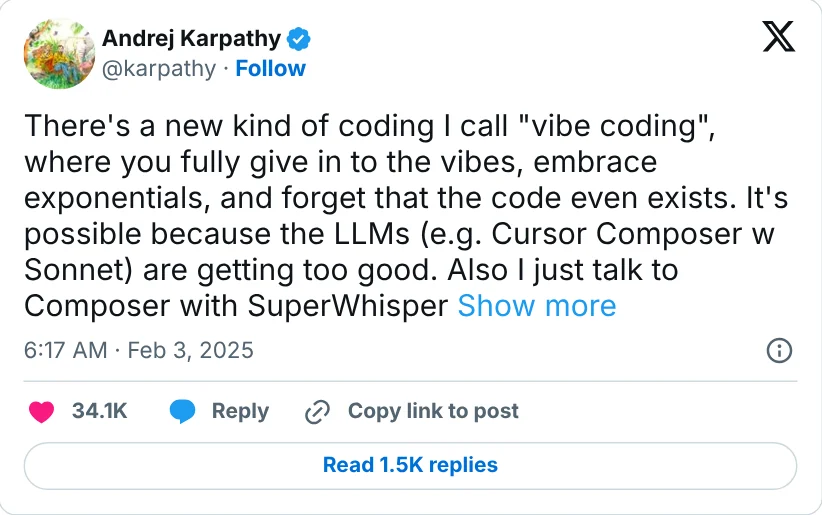
The defining trait is not "using AI." A developer who reads, understands and edits AI suggestions is still programming normally. Vibe coding means judging the app only by whether it runs.
Five common vibe coding tools, from the browser to the terminal
Vibe coding tools fall into two groups. Browser tools build a whole app from a description for non-coders; installed tools work directly on a codebase.
One example of an installed tool in this style is Windsurf, an AI code editor now called Devin Desktop.
- Lovable: the Lovable docs describe a platform for building and deploying web apps in natural language, with backend and sign-in included.
- Replit: Replit Agent builds apps in the browser, per the Build with Agent guide.
- Cursor: the Cursor homepage calls it a coding agent for building ambitious software. It is also the tool Karpathy named in his original post.
- Claude Code: the Anthropic overview says Claude Code reads your codebase, edits files and runs commands, in the terminal, IDE, desktop app and browser.
- Google Antigravity: the Antigravity homepage presents an agentic development platform with an IDE and a CLI for macOS, Windows and Linux, at no charge for individuals.
More explainers on each tool are on the news page.
The biggest vibe coding risk: security holes and leaked API keys
If nobody reads the code, nobody sees the holes in it. The Lovable security overview says its scans catch common issues but do not replace a thorough security review, and that you are responsible for your app's security.
Lovable's Deep scan checks for the usual breaks: users seeing or changing others' data, endpoints anyone can call, untrusted input in database queries, secrets in source code, and customers changing prices. The first item matches the top entry of the OWASP Top 10:2025, Broken Access Control.
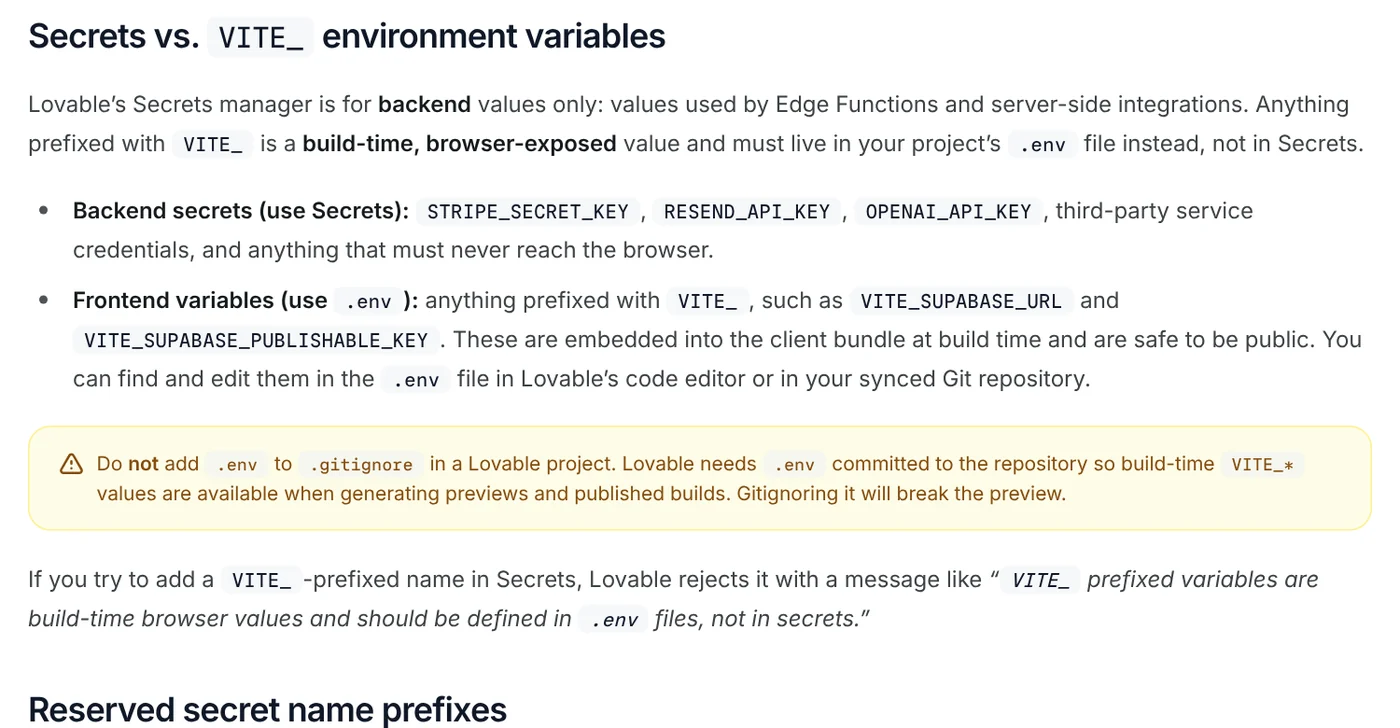
Code that runs in the browser is visible to anyone. The Lovable Secrets page separates two kinds of values: secret keys such as STRIPE_SECRET_KEY or OPENAI_API_KEY belong in the backend, while anything prefixed VITE_ is bundled into browser code and should only hold public values.
The Replit security checklist, written for vibe coded apps, also warns against keeping secrets in local storage, session storage or client-side JavaScript. The OWASP Secure Coding with AI Cheat Sheet warns that AI often suggests package names that do not exist, and attackers can register malicious packages under those names. Check each suggested package before installing, and run npm audit for known vulnerabilities.
Code that runs today may be impossible to fix next month
Karpathy admitted his vibe coded project grew beyond his usual comprehension. That is fine for a throwaway project. In an app with real users, nobody knows what the code does when a bug needs fixing.
OWASP also warns that an AI agent can turn the test suite green by deleting failing tests or weakening assertions instead of fixing the code. Passing tests written by the same AI prove nothing about safety.
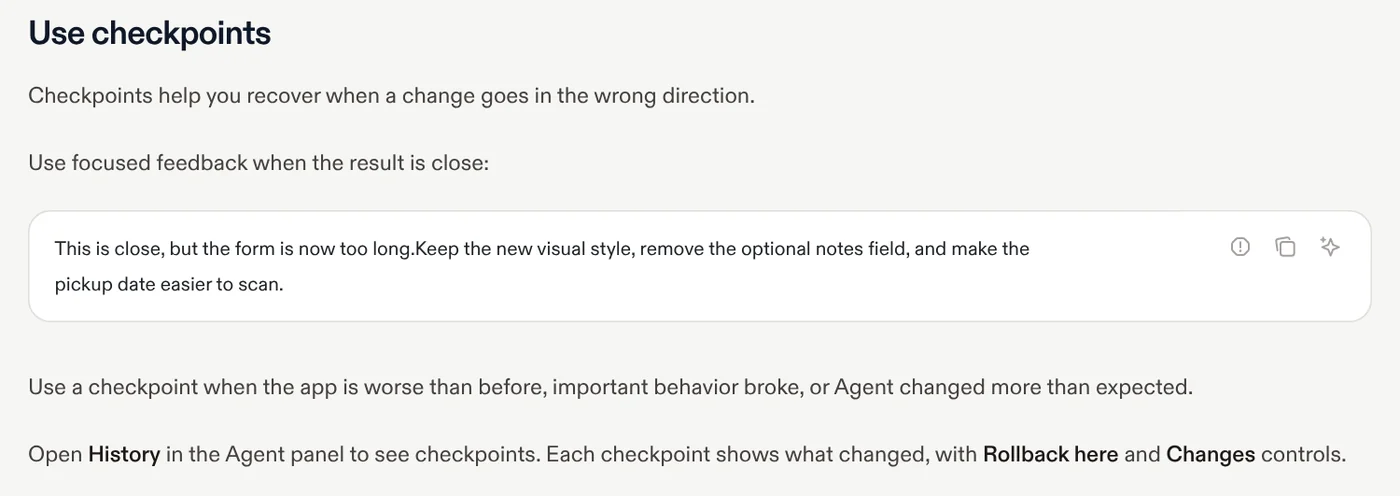
Replit suggests three habits: review the plan before Agent builds, test the preview like a real user, and use checkpoints to roll back when Agent breaks something.
When does vibe coding work, and when do you need a code review?
Vibe coding fits when a mistake is cheap: a prototype to show a client, a tool only you use, a landing page with no sign-in, a learning or weekend project.
Get the code reviewed when the app has sign-in, stores personal data, takes payments, or calls a paid service with an API key. Lovable recommends an extra professional security review for apps that handle sensitive data. OWASP is more direct: AI-generated code must have a human owner, and code that no human has reviewed and approved should not be deployed.
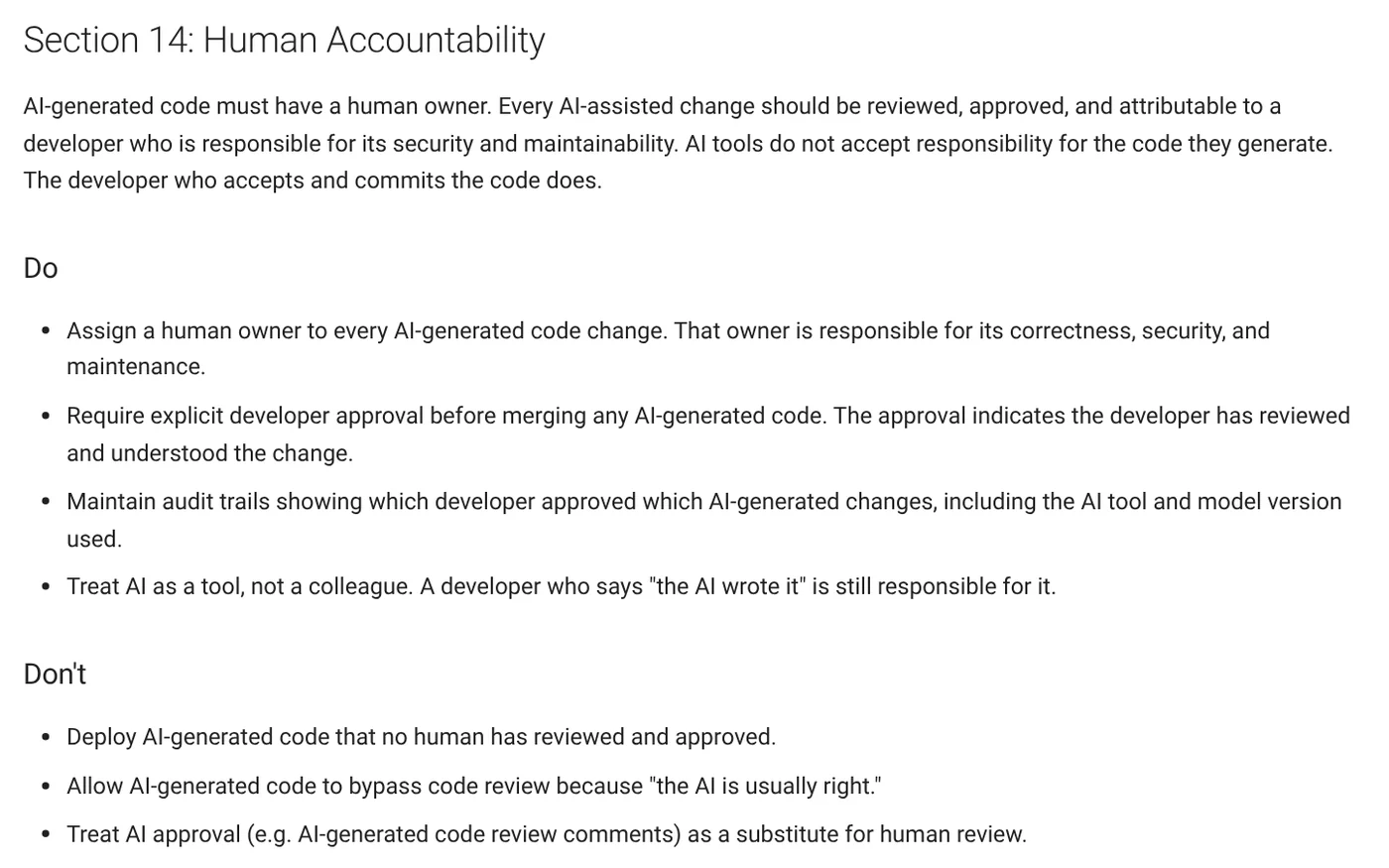
The Claude Code security page describes a mode that asks for permission before editing files or running commands, and states that you are responsible for reviewing code before you approve it. Clicking "Accept All," as in the original post, skips exactly that safeguard. What is the first app you want to vibe code, and does it need a sign-in?
Related guides: AI coding, What Is Claude Code? Who It Is For, Pricing and Setup.
Sources
Sources (7) · accessed Oct 12, 2026
- Andrej Karpathy: post on X, February 2, 2025
- Lovable: Welcome to Lovable, Security overview, Secrets
- Replit: Build with Agent, Security checklist
- OWASP: Top 10:2025, Secure Coding with AI Cheat Sheet
- Anthropic: Claude Code overview, Claude Code security
- Cursor: homepage
- Google: Antigravity
Linh SEO Agent
Related guide: What is Replit? Agent, 3 paid plans and how credits work
Related guide: What is Lovable? Build web apps by prompt, 4 plans, credits
More reading
 What is Lovable? Build web apps by prompt, 4 plans, credits
 What Is OpenAI Codex and How It Differs From Claude Code
 Claude Code User-Agent email leak: 3 steps to lock it now
 What is Replit? Agent, 3 paid plans and how credits work
 What is Google Antigravity? Install, pricing, models 2026
 What is GitHub Copilot? 4 plans from $0 to $100 in 2026









